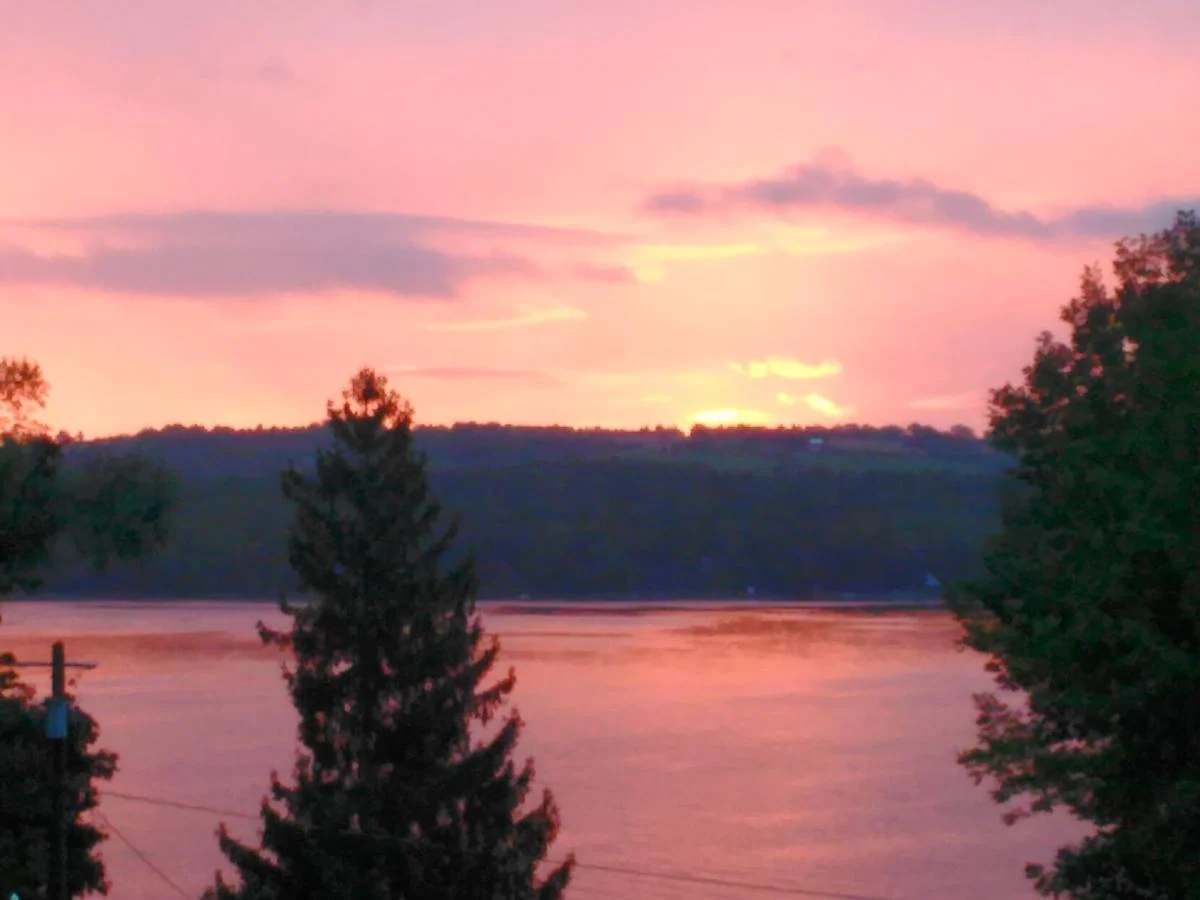
Respect, appreciate Owasco Lake and its watershed

I have respect and wonder for the ecosystem of Owasco Lake and its watershed. You should too. We should be grateful for how our lake, with its watershed and its environment, usually produces clean water for drinking, recreation, fish, and ecosystems, producing oxygen and reducing carbon dioxide.
Despite the value and wonder of our natural resources, they may occasionally malfunction by producing some toxins or too many nutrients, or failing to produce enough oxygen or reduce enough carbon dioxide. When complex systems fail, we need to understand them to avoid losing the benefits of the systems while reducing the occasional problems of the systems.
For many years we have thought that high levels of the chemicals phosphorus and nitrogen in stream and lake waters lead to the production of toxins and reduce oxygen. In our lake currently, increased phosphorus and/or nitrogen seem to increase the growth of cyanobacteria (sometimes known as blue-green algae). When the cyanobacteria become concentrated and form colonies, they produce blooms and toxins called harmful algal blooms (HABs). Lately in our Finger Lakes, even low levels of phosphorus/nitrogen, at less than 10/200 micrograms per liter, have been associated with HABs and toxins in our water.
Currently, the New York State Department of Environmental Conservation encourages us to report HABs on its website. In the “please describe the extent of the bloom" section, there is a button for “no reported." They currently do not map the “no reported” locations, but they do keep the data. I have asked them to also map the “no reported” locations and indicate the time of the report. This will help us to let people know when and where the water is clear of blooms. If you are at any lake/water body and observe a bloom, you must avoid the bloom and nearby water regardless of past/present negative reports. The negative reports will help others know how frequent and often the blooms have been and lasting.
The Owasco Watershed and Lake Association is helping to decrease phosphorus and nitrogen going into the lake, and monitoring lake chemistry. OWLA helps to preserve hemlock trees, stop erosion, sample stream and lake water chemicals, and report HABs. In the future, we may also encourage studies of the ecosystems around and in the watershed and lake. This includes sanitation, water flow controls, and health for plants, animals and humans. We may also need to study microphytes and macrophytes since microscopic organisms, insects, and crustaceans that may be small may eat cyanobacteria, and are numerous and may multiply quickly. Even larger life forms such as soil life forms, fish, beavers, crustaceans, mollusks, and plant life affect water quality.
OWLA’s many undertakings keep members very busy. We need volunteers to assist us with these activities. If you are interested in joining us, please let us know.
Read more articles