Auburn campers learn where their drinking water comes from

“Where does your drinking water come from?”
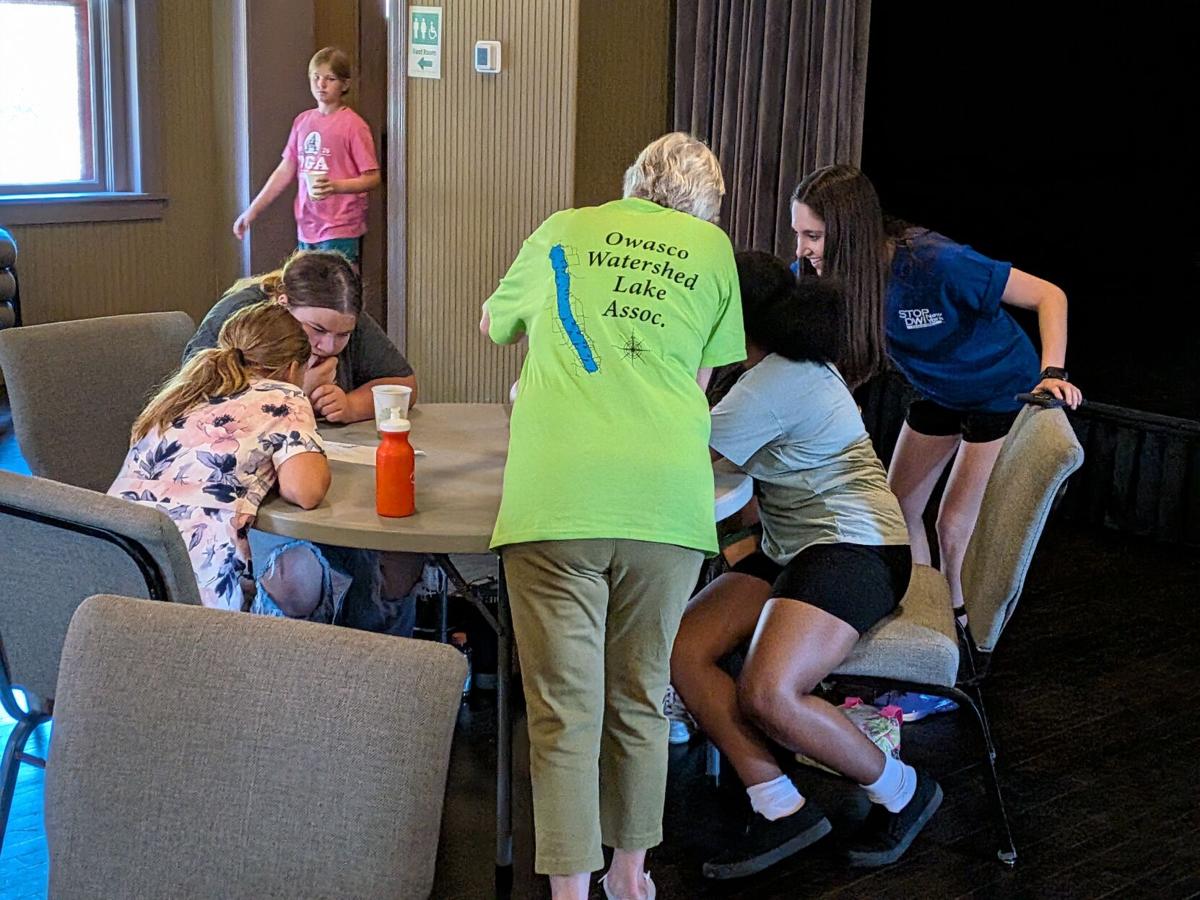
Ten junior high-age kids considered the question. It was an early August day, the second day of C.A.S.E. (Culture, Art, Science and Environment) Camp at the Cayuga Museum of History & Art. For this day’s program, museum staff had brought in Owasco Watershed Lake Association volunteers to engage with the children about the environment they live in and depend on.
“Owasco Lake!” several kids answered. OWLA’s mission is that every person should know their drinking water source. And more: “How does water get to us?” “How do we use that water?” And, “Where does the water go next?”
We spent the morning exploring those questions with the help of the museum’s artifacts and grounds. The kids took part in a scavenger hunt ranging over the museum’s campus, which includes the Willard-Case Mansion, Case Research Lab and Carriage House Theater. They studied historical maps of Auburn’s water infrastructure. They observed a demonstration of how the city tests water samples for bacteria and other contaminants. Finally, they did their own testing of the museum’s tap water.
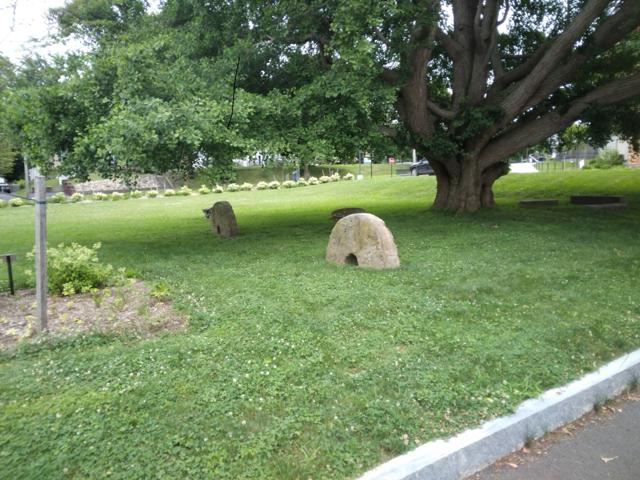
The scavenger hunt’s clues helped the children build a timeline of the city of Auburn’s quest to provide “pure and wholesome” water to its citizens. The museum’s locally discovered mastodon tusk came from an animal who lived about 10,000 years ago when glaciers carved out the Finger Lakes, including Owasco Lake. Millstones on the grounds under the museum’s spreading ginkgo tree recalled the fledgling Auburn community’s late 18th century and 19th century industries. Mills built on the shoreline of the Owasco River depended on hydropower but suffered disruptions during droughts. A chunk of hand-bored tamarack (larch) that the kids examined was once part of a rot-resistant wooden trough and pipe system carrying water from nearby springs to the Auburn State Prison, built in 1816. The prison’s growing population and its shoe and textile manufacturing required more water than the outlet could reliably provide.
Nineteenth century Auburn leaders spent decades creating a citywide water system. Although most homes had wells, residents worried about the risk of fire. Nearby hills weren’t high enough for water towers to work effectively. Auburn made history as the first city in the United States to adopt the high-tech Holly direct pressure system consisting of a pumphouse, pipes and hydrants. It worked so well that in 1866, Auburn’s hydrants and hoses beat Utica’s firefighting pumper truck in a friendly water throwing contest. Hydrant water shot over Auburn’s tallest structure, a church spire, besting the pumper’s attempt by 15 feet. A century later in 1973, Auburn’s water system saved the Cayuga Museum from a fire accidentally started by construction workers. Today, the museum’s iconic curved Tiffany window illustrates the story, still here and beautiful despite heat and water damage.
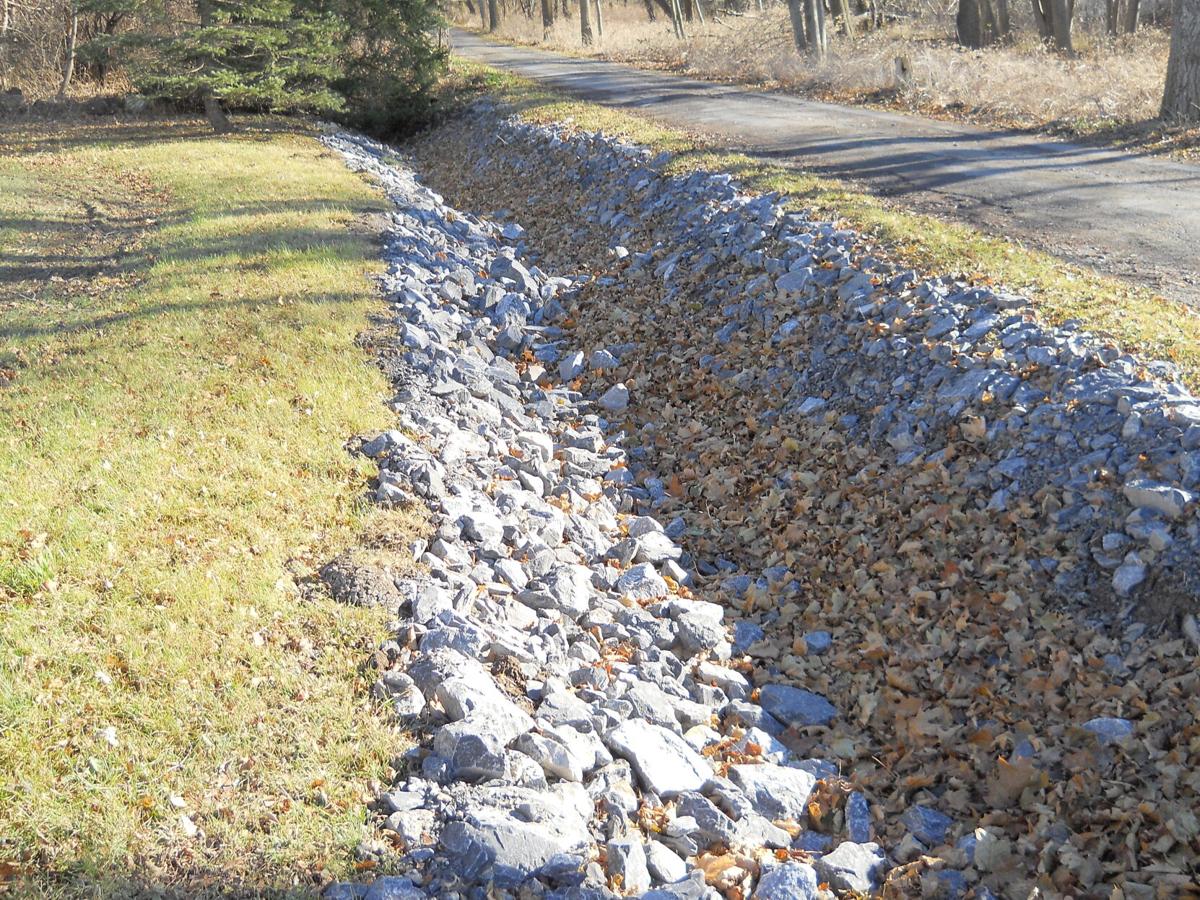
The scavenger hunters discovered exposed iron pipe in the mansion’s basement pointing to the indoor plumbing Dr. Willard and his daughters enjoyed in their home by the late 1860s. A framed black-and-white photograph hanging in the museum lobby shows the wealthy Willard family enjoying an elaborate fountain on the estate grounds where the Schweinfurth Art Center stands today. (The fountain tended to leak.) On the building exteriors, downspouts installed around 1900 drained rainwater off rooftops to French drains filled with gravel, then downhill via drainpipes.
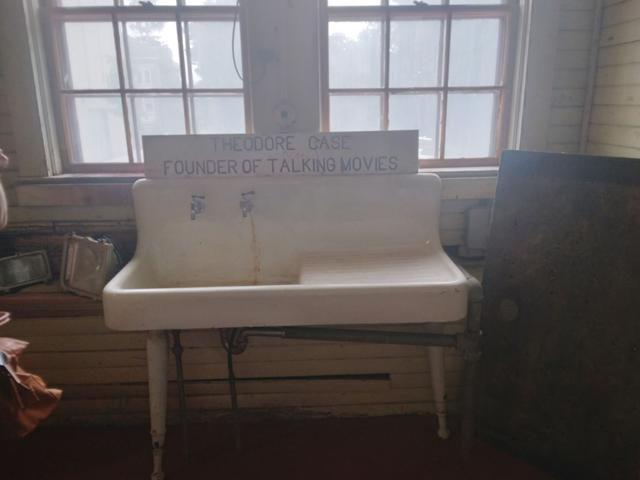
A sink in the Case Lab, the converted greenhouse behind the mansion where Dr. Williard’s nephew Theodore Case invented sound-on-film technology in the 1910s and 1920s, prompted the children to consider how chemicals the lab might have used were discarded. In those days, even with careful storage of known toxic materials, flushing wastewater down the drain was a common practice. The children sussed out a modern-day clean-out plug in the lawn downhill from the buildings, where sewer line blockages can be accessed and cleared. Today’s sewer lines carry used water to a wastewater treatment plant.
After a snack break, the campers perused historical maps and found the water main for the museum out on Genesee Street. One turn-of-the-century map elicited “ewwws!” from the kids when they saw that at that time, sewer lines throughout the city ended at the Owasco River. They agreed that dumping your sewage where you get your drinking water was a bad idea. The city rectified this in two ways. After the late 1800s and an outbreak of typhoid fever, it stopped allowing sewer lines to empty into the river. The city also moved its water intake pipe from the Owasco River to Owasco Lake, and has shifted the pipe into deeper water at least twice since then.
Other maps helped illustrate Auburn’s water infrastructure “big picture” up to now. In 2025, two pumping stations, the water filtration plant, two reservoirs and the water pollution control plant produced 1,357,194,000 gallons of water. It was noted that our drinking water source is located south, and upstream, of the city while the wastewater treatment plant is located north, and downstream.
Andrea Kloster from Auburn's municipal utilities department stopped by to demonstrate some of the tests she uses to check tap water at homes and businesses. As a final activity, the children took their own water samples and conducted simple paper strip tests for qualities such as pH and hardness, and for substances like iron, copper and more.
With an increasingly online world, it’s vitally important to teach our children how the real world works. When they step outside, will they know what is there but invisible, providing them with what they need to live well? Part of the answer is water, the lake it comes from, the infrastructure that brings it to us and takes it away, and the people who keep it all flowing.
Thank you to city of Auburn staff, including Scott McIntyre, Albert Cockrell, Jason Brown, Seth Jensen, John West and Andrea Kloster for their friendly advice and support!
Read more articles