A January Nature Almanac for Owasco Lake
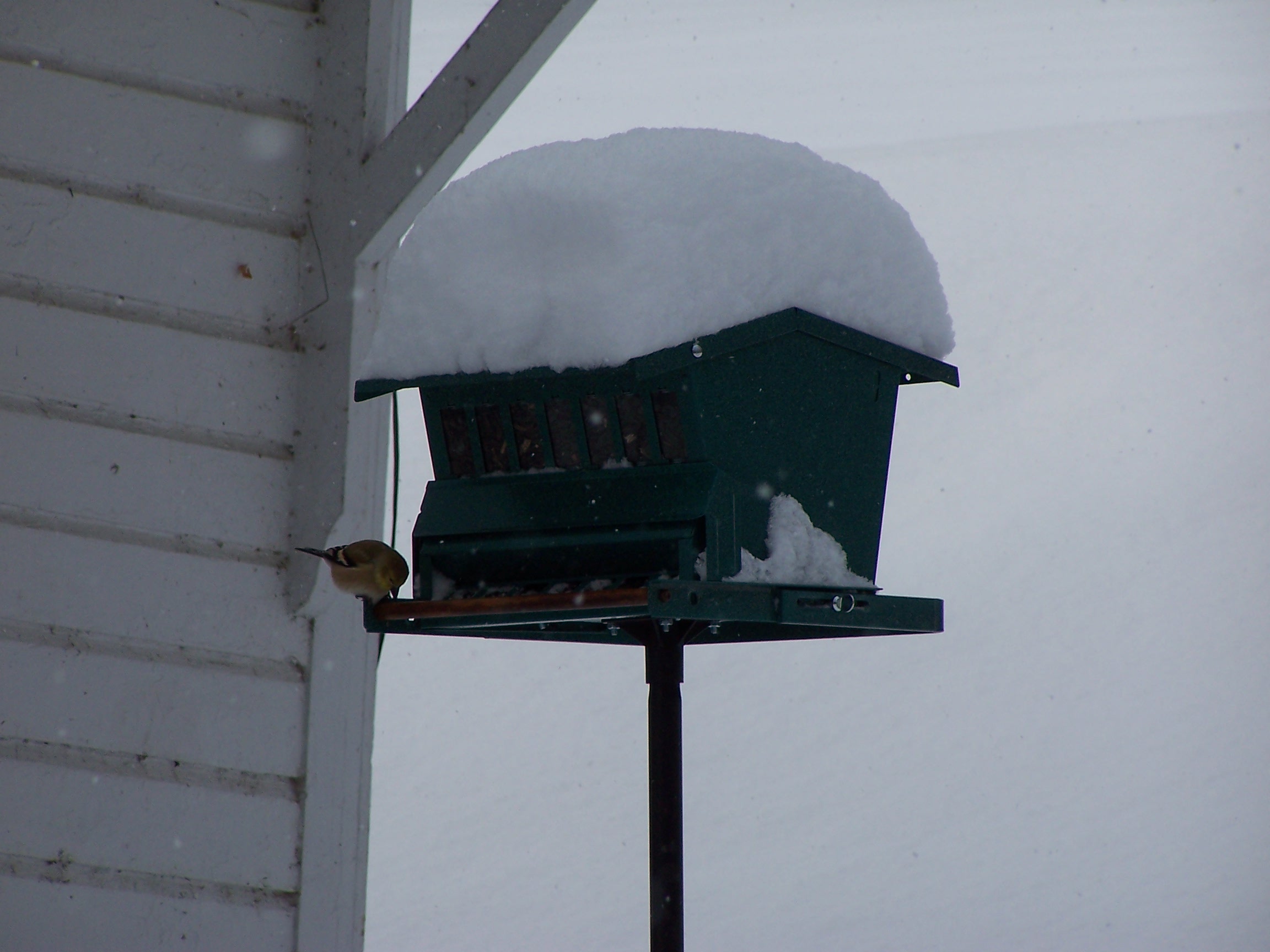

Winter finches like the Common Redpoll arrive to feed on weed seeds. Their cousins the Red and White Billed Crossbills come to feed on pine cones. Along the roadsides, on recently harvested fields, flocks of Horned Larks and Snow Buntings dash to and fro in their little choreographed aerial dances.
Leaves lie trapped just below the icy skin of the pond ice as if they have been veneered there for us to admire.
Red Tail Hawks sit on their telephone pole perches, with feathers fluffed up against the cold winds, while they await an unwary mouse.
Sycamores, with their white speckled trunks, stand alone in open farm fields and along old winding stream beds. Their patterned skeletons anticipate the time when springs’ sunshine will deck their boughs with new leaves.
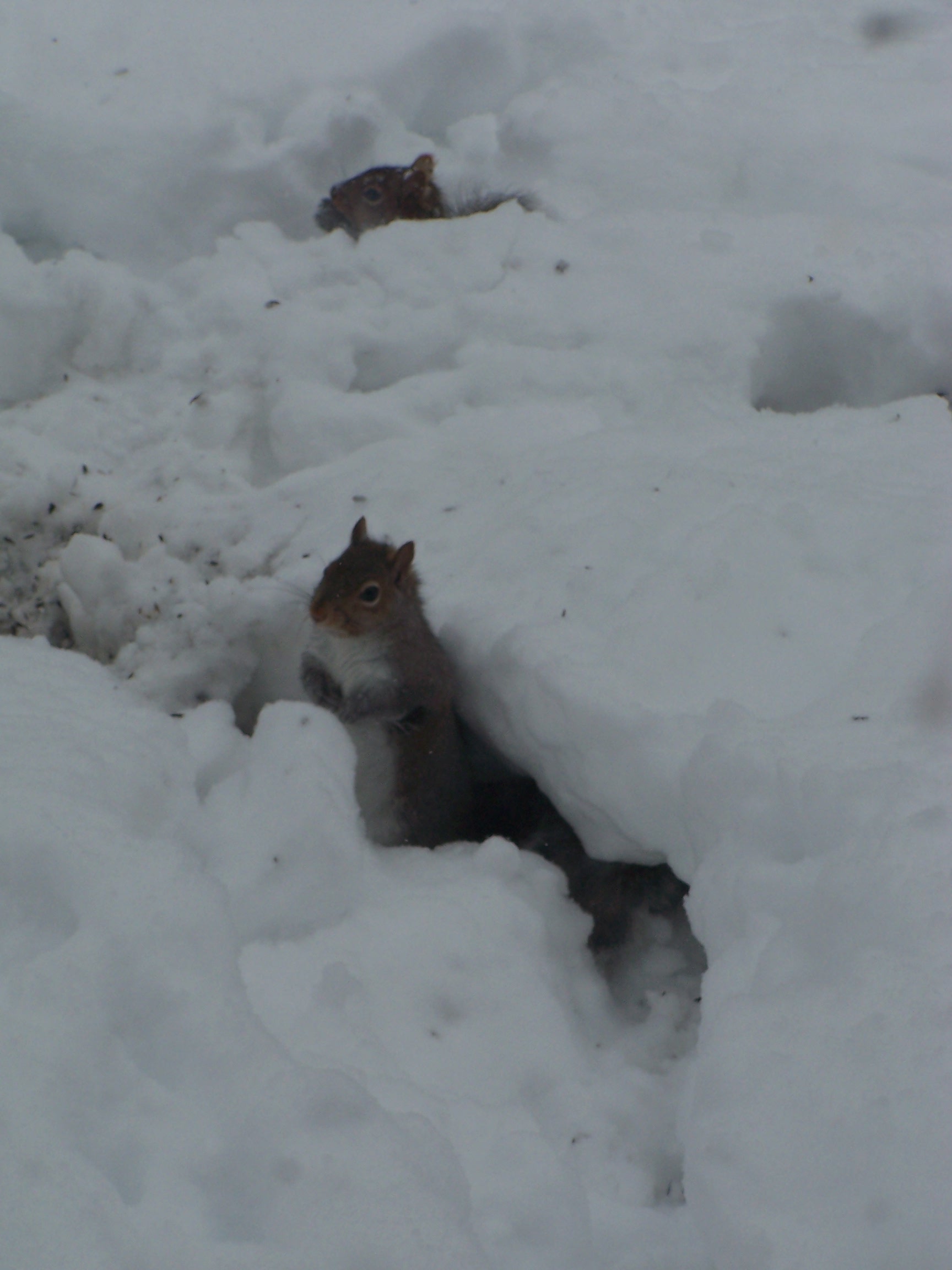
Black, gray and red squirrels (we have all three), never ones to sleep the winter through, can be seen running through the snow laden branches, or raiding a feeder, searching for yet one more meal.
Sumac berries stand out red against the white background. Cedar Waxwings, American Robins, Bluejays and Purple Finches look for these berries to add to their winter diet.
Deer can be seen in farm fields as they look for corn that was missed during the harvest.
The shortest day of the year has passed and now each day is longer until June 21st.
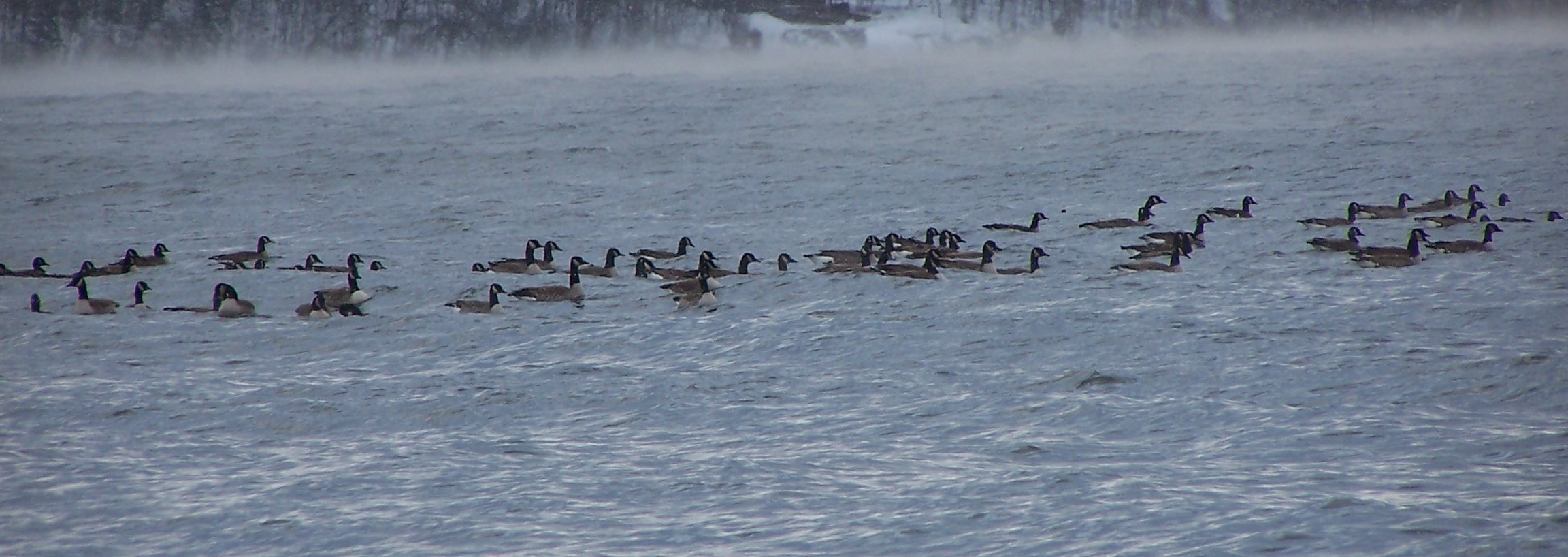
The thousands of Canada Geese now on Owasco Lake are now joined by as many as 400 Tundra Swans in the NE corner of the lake. Along with them are Mallards, Greater and Lesser Scaup, Black Ducks, Mergansers and Redheads, along with-Bald Eagles seen along the Owasco Lakeshore.
The creaking of the cold trees limbs is a counterpoint to the tapping of the Hairy and Downy Woodpeckers who calmly go about their search for insects. Listen, also, for the sound of the Pileated Woodpecker with its “yuk, yuk, yuk” call.
Look along the edges of winter wood lots for the Tom Turkey as they strut with their harems.
Discarded Christmas trees placed along the edge of wood lots act as shelter for many small creatures. (Please take them out of their plastic disposal bags!)
JANUARY IS ALSO A MONTH TO LOOK UP TO THE STARS
January offers a fine month for star gazing. Venus is no longer visible in the morning sky but it has been replaced by Jupiter. Saturn and Mars are also visible in the morning and they will be joined by Mercury toward the end of the month.
One of the most absorbing scenes is the one given us by the Pleiades. Look directly overhead at about 8 pm in mid- January and you will see a group of six or seven twinkling stars. These are the Pleiades or the "Seven Sisters". If you look closely you can actually see about 14 stars. The use of a pair of binoculars will allow you to see about 7 more. A good telescope will show you more than 200 more. Professional photographic techniques show us that there are actually 2000 stars in the cluster.
These stars are mentioned many times in ancient lore. The Old Testament speaks of them, as does the Greek Poet Heriod. The great historian Ptolemy assembled a mass of knowledge about the world in the second century B.C. called the "Almagest" and he mentions the Pleiades in this work.
There are many stories connected with the Seven Sisters. Their names are Alcyone, Asterope, Calaeno, Electra, Maia, Merope, and Taygeta. Legend has it that Orion pursued the sisters through the woods of Boeotia for more than five years until Zeus took pity on the Sisters and conveyed them all up into the heavens where they are forever safe from the pursuit of Orion.
Whatever the stories behind the Pleiades they are certainly a lovely spectacle in the nighttime sky as they twinkle more than 300 light years away. Take time this evening as you drive home and look up at the wonder on the heavens and the vastness of space.
Read more articles