What are PFAS, and why are they harmful to our health, environment?
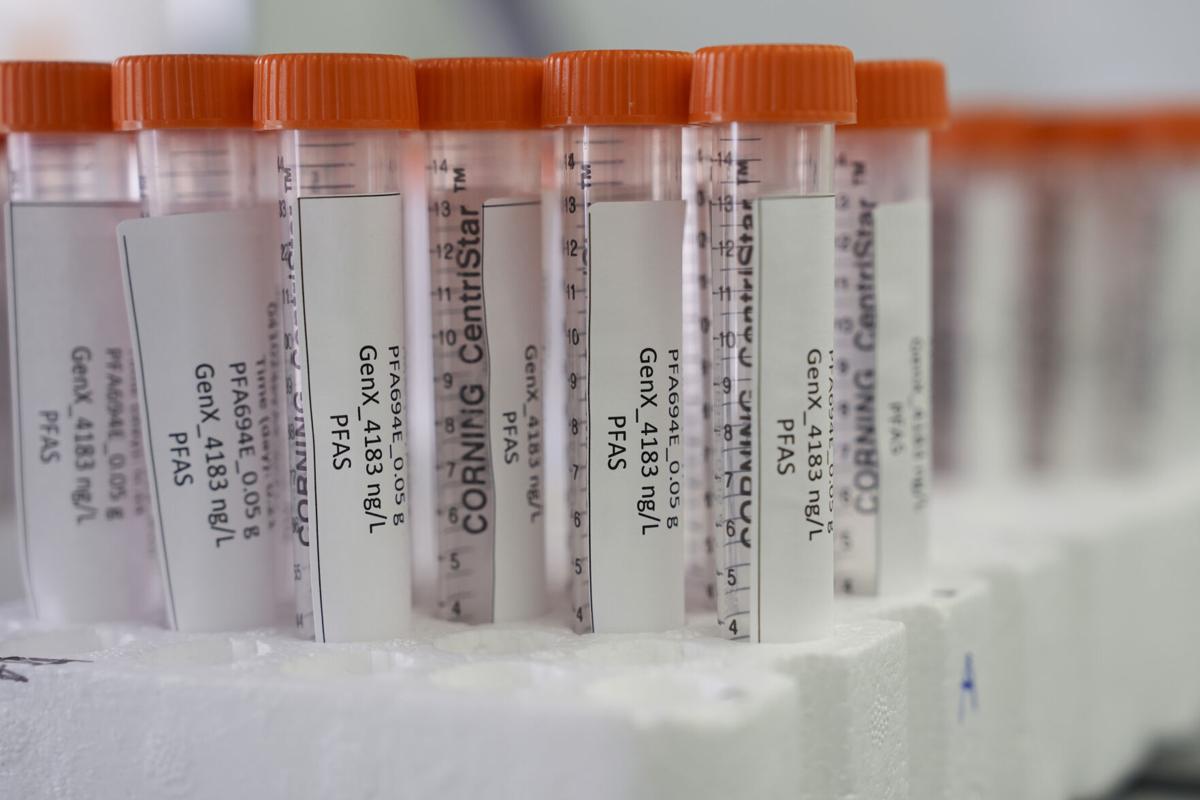

When we think of pollution in Owasco Lake and other Finger Lakes, our thoughts go to nutrients, harmful algal blooms, invasive species like zebra mussels and hemlock woolly adelgid, and bacteria. Another chemical of concern that has been gaining notice recently as a possible pollutant in the Finger Lakes is PFAS.
PFAS stands for per- and polyfluoroalkyl substances. The first PFAS was Teflon, discovered by Roy Plunkett at DuPont in 1938. Teflon was first used in coatings for equipment used in making the first atomic bombs to prevent corrosion from strong acids. After World War II, Teflon began to be used for nonstick cookware and stain-resistant fabrics.
In the 1950s and 1960s, DuPont and 3M noted some signs of illness in their Teflon workers. By 1980 they had done or were aware of animal studies that showed that Teflon caused birth defects, cancer, infertility and immune deficiency in rats. In 1976 the Environmental Protection Agency began to regulate known hazardous chemicals. Chemicals that were in general use and thought to be safe were not regulated. Since 3M and DuPont had kept their studies secret, Teflon and other PFAS were unregulated.
In 1998 in Parkersburg, West Virginia, farmer Wilbur Tennant’s cows became sick and died from drinking stream water contaminated with PFAS from a nearby DuPont Teflon plant. The farmer contacted DuPont and the state of West Virginia, but they denied any possible relationship with the chemicals from the plant. DuPont was also dumping PFOA (a PFAS chemical used to back Teflon) into the river used for the drinking water source for Parkersburg. Tennant then got environmental lawyer Bob Bilott from Cincinnati to try to find out what was happening and get justice. After years of investigation and a civil class action law suit on behalf of about 70,000 exposed people, DuPont and the lawyers headed up by Bob Bilott agreed to study all exposed. They got blood samples and medical histories on about 65,000 people willing to participate. DuPont also agreed to pay for any diseases associated with high PFAS (especially PFOA) levels in this case.
Initially the study was expected to take four years, but it took seven, with many of the exposed people and the lawyers being frustrated and uncompensated. Finally, the report and other studies confirmed that higher levels of PFAS (PFOA) were related to higher levels of thyroid disease, higher cholesterol, liver damage, kidney cancer and testicular cancer. The PFAS (PFOA) levels were somewhat related to rates of breast cancer, inflammatory bowel disease and infertility. For babies exposed before birth and after, higher levels of PFAS (PFOA) were related to decreased breast tissue, reduced immune response, lower birth weight, more obesity, earlier puberty and more pregnancy loss.
DuPont and its spinoff company Chemours declined to adhere to their original agreement for the class action case and started to fight each case individually. After losing the first three cases for $2 million to $5 million, DuPont and Chemours decided to give the class of 3,500 ill or deceased persons $671 million for the whole group.
After this case the EPA set PFOA and PFOS safe levels to be 4 parts per trillion for drinking water. In 2003, 3M advised the EPA that likely PFAS in sewage sludge used for fertilizing fields would cause disease. Still, the EPA fails to limit PFAS in sludge for land use. The New York State Department of Environmental Conservation in 2025 lacks any restrictions on sludge with PFAS less than 20 parts per billion. If sludge has 20 to 99 parts per billion, then it may be used for some types of land use, else it must be contained in a membrane-lined landfill.
PFAS exposure should be prevented and/or limited as much as possible. PFAS is generally considered to be in the following things unless specifically stated to be absent/limited: seafood, some meat, vegetables grown in sludge/fertilizer with PFAS, dust from fabrics with stain/water proofing and wash water from such fabrics, aerosol spray of PFAS for water/stain proofing or lubrication/waxing, some plastic food packaging, shampoos, conditioners, sunscreen/cosmetics especially when water-resistant, toothpaste, dental floss, and aqueous firefighting foam. PFAS gases may also be released into the air when producing computer chips, like at the Micron plant to be built in Clay.
Currently blood tests to check for some of the more common PFAS chemicals may be done but they may cost from $300 to $600 per test. If you are unintentionally exposed to PFAS at possibly dangerous levels, the company or the source of the exposure may be responsible for your testing. In the future, monitoring of high-risk people/animals for PFAS and/or diseases related to PFAS and/or other new technologies may be done to avoid waiting for decades to discover environmental hazards.
Current research shows that Bacteroides uniformis and some other microbes living in our gut ingest PFAS, and then the bacteria and the PFAS in it go out of our body with our stools. Generally, the good microbes in our gut grow better when we eat diets rich in coarse vegetables, fruit and grain fiber. This may also help some to decrease our bad cholesterol.
In the future, PFAS may be eliminated from consumer products, and PFAS in waste, air, water, sludge and solids may be broken down into harmless chemicals and/or concentrated to be put in safe membrane-lined landfills. Research and pilot studies on implementations are ongoing.
Phillip Gioia, M.D., MPH, C.I., is a member of the board of directors of the Owasco Watershed Lake Association. For more information, or to join OWLA, visit owla.org.
Read more articles